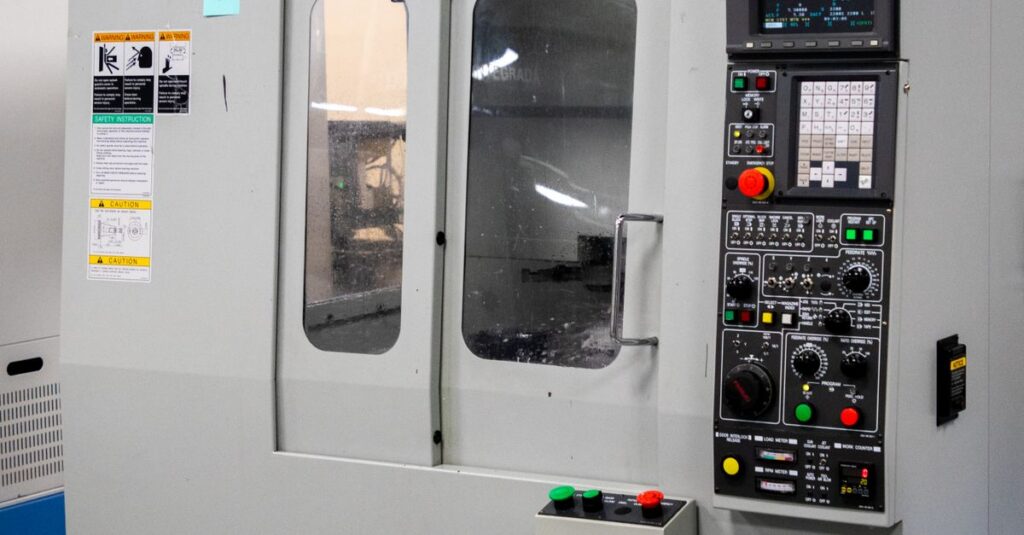
- Machine shops wait roughly two months before new $300,000 CNC machines cut parts
- Siemens digital twin arrives day after purchase, cuts ramp-up time 50%
- Meet at the Machine initiative launched at IMTS 2026 with TRAK Machine Tools
- Controller-specific simulation uses actual RPMs, speeds, force, power of each machine
A $300,000 CNC machine sits idle for roughly two months after delivery before cutting its first part—not because the spindle won’t turn, but because the digital work happens after the physical machine arrives. Brent Kephart of Siemens explained at IMTS 2026 that the company’s “Meet at the Machine” initiative attacks this delay by delivering a digital twin of the machine the day after purchase, cutting ramp-up time by up to 50 percent.
Digital twin arrives before programming starts
Traditionally, programming, validation, and training activities don’t begin until after a machine has been installed. The new initiative shifts these activities to an earlier stage in the process. Day-one productivity is the first offering under Siemens’ “Meet at the Machine” initiative, which brings hardware and software teams together with machine tool OEM partners. Built in collaboration with TRAK Machine Tools, the first phase focuses on enabling part manufacturers to be productive from day one.
Standard CNC simulation uses theoretical characteristics of a five-axis machine to predict what will happen with a given part. Because Siemens builds the controller, the digital twin uses the actual RPMs, speeds, force, and power of that specific machine. This eliminates the prove-out stage that may take months, delaying productivity and idling employees.
Five-axis machines compete on more than speeds and feeds
Five-axis machines at the same performance level all compete on speeds, feeds, and price, so OEMs need a differentiator beyond those specs. Without automation and digitization, they have few ways to stand apart. Mark Hindsbo, head of Operations Software at Siemens, said the initiative enables customers to “be productive faster, accelerate return on investment and reduce ramp-up time by up to 50 percent.”
The delay stems from a fragmented workflow. One delay results from the setup person at the machine seeking to interact with the CNC programmer to discuss adjustments that he/she observes are required. Alternatively, the setup person may simply make the changes without providing any feedback to the CNC programmer. On-line verification wastes machine time, so verifying programs off-line using CAM toolpath displays or third party software can reduce setup times.
The economics matter more in high-mix environments. A five-part job with a 60-second program cycle has less than 10 minutes of actual production runtime—but a one-hour setup dominates the entire elapsed time. When a $300,000 asset sits idle while programmers and setup personnel work through validation cycles at the machine, the capital cost compounds. Shifting that work offline—before the machine ships—converts idle time into productive runtime from the first power-on.
Initiative targets workforce shortages and complexity
Manufacturers today face complexity, workforce shortages and pressure to become productive faster. While advances in software, automation and digitalization continue to create new opportunities, many manufacturers still face challenges connecting those technologies into efficient production workflows. Meet at the Machine provides a framework for Siemens and machine builders to jointly deliver integrated machining solutions that address real manufacturing challenges. The initiative is designed to make manufacturing customers more productive and enhance quality and performance.
A longer roadmap of additional capabilities is planned under the initiative. The first phase focuses specifically on eliminating the two-month delay between machine delivery and first-part production, but the broader goal is creating what Siemens calls a continuous digital thread connecting engineering, programming, virtual validation, and execution.
If you’re evaluating a CNC purchase above $200,000, ask the OEM whether digital twin delivery is bundled with the machine or available as an add-on. The two-month idle window represents lost production revenue that compounds over the life of the asset, and any solution that shifts programming and validation offline before installation will compress time-to-first-part. Siemens has staked its position with controller-native simulation; competitors will follow with their own approaches, so make sure your capital justification includes ramp-up time, not just spindle specs.
What causes the two-month delay before a new CNC machine cuts parts?
The delay stems from programming, validation, and training activities that traditionally begin only after the machine is installed on the shop floor. Setup personnel and programmers work through prove-out cycles—testing toolpaths, verifying offsets, and debugging programs—while the machine sits idle. Offline simulation tools can compress this timeline, but many shops still perform these steps at the machine.
How does a controller-specific digital twin differ from standard CAM simulation?
Standard CAM simulation uses theoretical machine characteristics to predict toolpaths and cycle times. A controller-specific digital twin uses the actual RPMs, speeds, force, and power data from the physical machine’s controller, reflecting how that specific machine will behave rather than a generic model. This eliminates discrepancies between simulated and real-world performance, reducing the number of on-machine adjustments needed during prove-out.
Article Source: Why New CNC Machines Sit Idle for Months