- DOE selected 278 Genesis Mission projects from 5,000 applications
- MIT leading 6 projects, participating in 9 more
- Phase I awards range $500,000-$750,000 for 9 months
- IBM pledged $50 million in quantum computing access
The Department of Energy selected 278 projects from more than 5,000 applications for Phase I funding under its Genesis Mission, with MIT researchers leading 6 and contributing to 9 others. The DOE received more than 5,000 applications and awarded funding to 278 projects led by national laboratories, institutions of higher education, companies and nonprofit organizations. Phase I awards will range from $500,000 to $750,000 and will support a nine month project period.
The Genesis Mission, a national initiative, intends to build “the world’s most powerful integrated science discovery platform” by incentivizing cross-sector collaborations that leverage AI, supercomputing, quantum systems, and advanced scientific instruments to accelerate breakthroughs in energy, scientific discovery, and national security. The Genesis Mission rests on a straightforward premise: a computing revolution is underway, and the U.S. should harness it to double the productivity and impact of its trillion-dollar-a-year R&D engine within a decade.
Rare earth separation project addresses China’s dominance
Martin Bazant from MIT’s Department of Chemical Engineering leads a project on AI-driven discovery of electrochemical separation methods for rare earth elements. Rare earth elements (REEs) are crucial components in high-tech products, particularly in green technologies such as electric vehicles and wind turbines, but because of their physical and chemical similarities, REEs are very challenging to separate, and current REE processing techniques require multiple stages and are chemically and energy-intensive.
Electrochemical separations offer a modular alternative to the traditional thermal and solvent-based extraction methods, by potentially combining both selectivity and a low chemical footprint. A recent breakthrough from the University of Chicago in July 2026 demonstrated the first time that people have used electrochemical intercalation and harnessed the structural characteristics to separate similar lanthanides.
China currently controls the vast majority of global rare earth processing capacity, creating strategic vulnerabilities for U.S. manufacturing that depend on these materials for permanent magnets in motors, wind turbines, and defense systems. Chemical-free electrochemical methods could enable domestic processing at smaller scale than China’s multi-stage solvent extraction plants, reducing the minimum viable facility size and making distributed recovery from e-waste and coal byproducts economically practical.
Fusion and quantum projects draw industry backing
Cristina Rea from MIT’s Plasma Science and Fusion Center will lead CATALYST, a project using AI to model plasma behavior in fusion tokamaks. Ronald Garcia Ruiz from the Laboratory for Nuclear Science heads work on AI-driven quantum sensing for precision tests of fundamental physics. Both projects align with DOE’s push to integrate experimental facilities with computational infrastructure.
IBM will provide up to the equivalent of $50 million of its world-leading utility-scale quantum compute access, powered by its 156-qubit IBM Quantum Heron and 120-Qubit IBM Quantum Nighthawk processors to support Genesis Mission research. The National Quantum Supercomputing User Facility will complement DOE’s existing exascale and future post-exascale high-performance computing systems and integrate with artificial intelligence, and together, these capabilities will form a unified HPC-AI-quantum computing ecosystem.
Multi-agent AI tackles materials and manufacturing
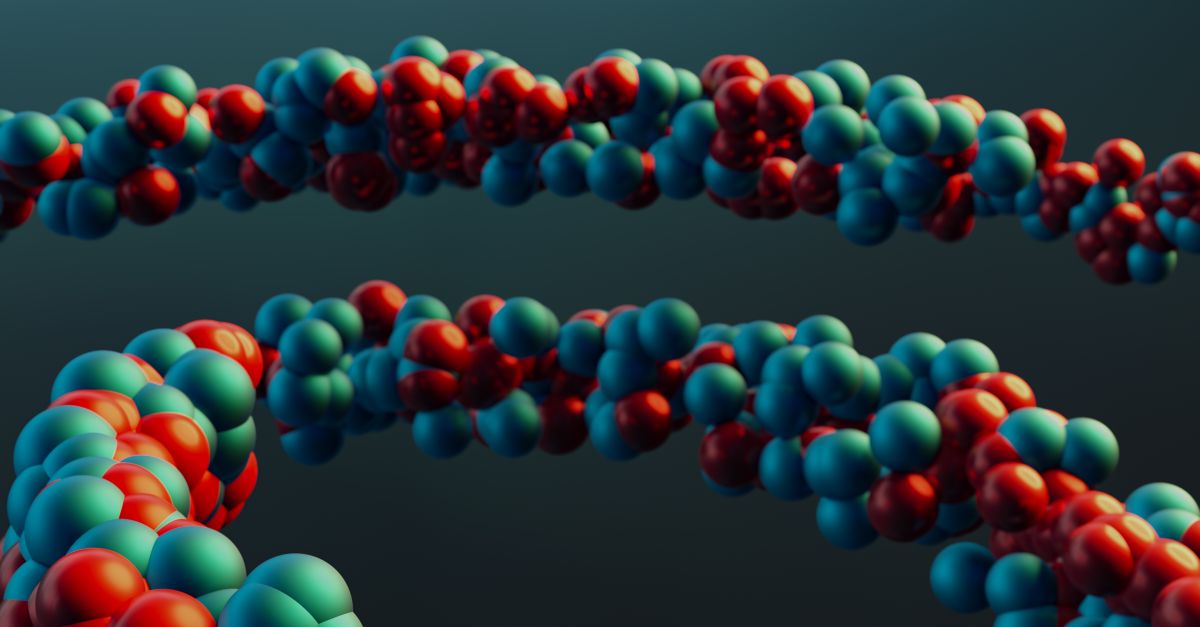
Bradley Olsen from Chemical Engineering leads a project using multi-agent inverse design to engineer block polypeptoids into hierarchical nanostructures. The approach exploits biomolecular self-assembly to design materials with targeted properties—a strategy that could accelerate development cycles for specialty polymers used in filtration membranes, drug delivery, and coatings.
MIT researchers also join a GE Vernova-led project on generative engineering for rotating blade design, directly relevant to turbomachinery efficiency in power generation and aviation. Phase II awards will range from $6 million to $15 million over a three year project period. Phase I projects that identify promising pathways toward transformative capabilities at scale may be considered by DOE for further Genesis Mission funding.
Genesis Mission funding structure creates a clear pathway from proof-of-concept to scale. Phase I teams have 9 months to demonstrate integrated AI-science workflows worth the investment. The real filter comes at Phase II selection, where only projects showing transformative potential compete for $6-15 million awards. For research groups and their industry partners, the message is direct: use Phase I to validate technical risk and quantify impact, not to publish papers. DOE wants deployable workflows, not incrementalism.
What is the Genesis Mission’s total funding allocation?
The RFA, with $293.76 million in anticipated total funding, solicits project proposals for 21 areas ranging from advanced manufacturing and industrial productivity to energy and nuclear physics. This represents the initial Phase I and Phase II competition, with DOE planning additional funding cycles in FY27.
How does electrochemical separation improve rare earth processing?
Electrochemical separations offer a modular alternative to the traditional thermal and solvent-based extraction methods, by potentially combining both selectivity and a low chemical footprint. Unlike conventional multi-stage solvent extraction that requires large centralized facilities and generates chemical waste, electrochemical methods use voltage-controlled ion transport to separate elements based on their different electrochemical properties, enabling smaller-scale operations suitable for recycling facilities.
Article Source: MIT projects selected for funding under US Department of Energy’s Genesis Mission