- AI supports aviation instructors through data analysis, not replacement, addressing cognitive load challenges.
- Competency-based training uses observable behaviors to personalize pilot assessment and reduce one-size-fits-all approaches.
- eVTOL manufacturing accelerates toward 2026 commercialization with advanced composites and automated production systems.
- Instructor cognitive load reaches five times working memory capacity during critical flight phases.
Aviation training is undergoing a fundamental transformation as artificial intelligence, advanced air mobility (AAM), and electric vertical takeoff and landing (eVTOL) aircraft converge to reshape how pilots are trained and certified. Rick Adams, a Fellow of the Royal Aeronautical Society and author of The Robot in the Simulator (2024), recently outlined how AI-driven data analysis and competency-based assessment are addressing critical training bottlenecks—insights that parallel broader industrial automation challenges facing plant managers and engineers across advanced manufacturing sectors.
How Is AI Reducing Instructor Cognitive Overload in Training Systems?
Artificial intelligence supports instructors rather than replaces them, according to current industry practice. The challenge is quantifiable: a recent white paper from Amris Aviation found that during the four highest-criticality phases of flight (Take-off, Climb, Approach, and Landing), instructor cognitive load reaches nearly five times the working-memory capacity limit.
This cognitive bottleneck directly impacts training effectiveness. CBTA focuses on performance-driven training and assessment, ensuring that learning objectives align with real-world competencies, prioritizing measurable performance standards over rigid training hours. The framework uses eight or nine defined competencies with dozens of Observable Behaviors (OBs) within each—far more data points than human instructors can reliably capture during live sessions.
AI-powered debriefing tools automatically compare a pilot’s performance during simulator sessions against defined procedural standards, enabling what Adams describes as “augmenting, not replacing” human expertise. Systems map evidence to observable behaviours to produce a competency assessment, with trends surfacing across pilots, instructors, and fleets. This data-driven approach mirrors quality control automation in manufacturing, where sensor systems capture process variations that human operators cannot consistently detect.
The manufacturing parallel is instructive for engineers implementing agentic AI systems: successful integration requires identifying specific cognitive loads that machines handle better than humans, while preserving human judgment for complex decision-making. The instructor always has the final say and can override system suggestions, as automation may assist, but it does not replace professional judgment.
What Manufacturing Technologies Are Enabling eVTOL Production Scale-Up?
The eVTOL industry is rapidly moving from testing prototypes to launching real commercial services, with companies moving from development into testing and certification. In March 2026, Archer Aviation became the first eVTOL manufacturer to receive 100% acceptance from the FAA for its Means of Compliance, with the company now focused on completing final verification to start commercial flights by late 2026.
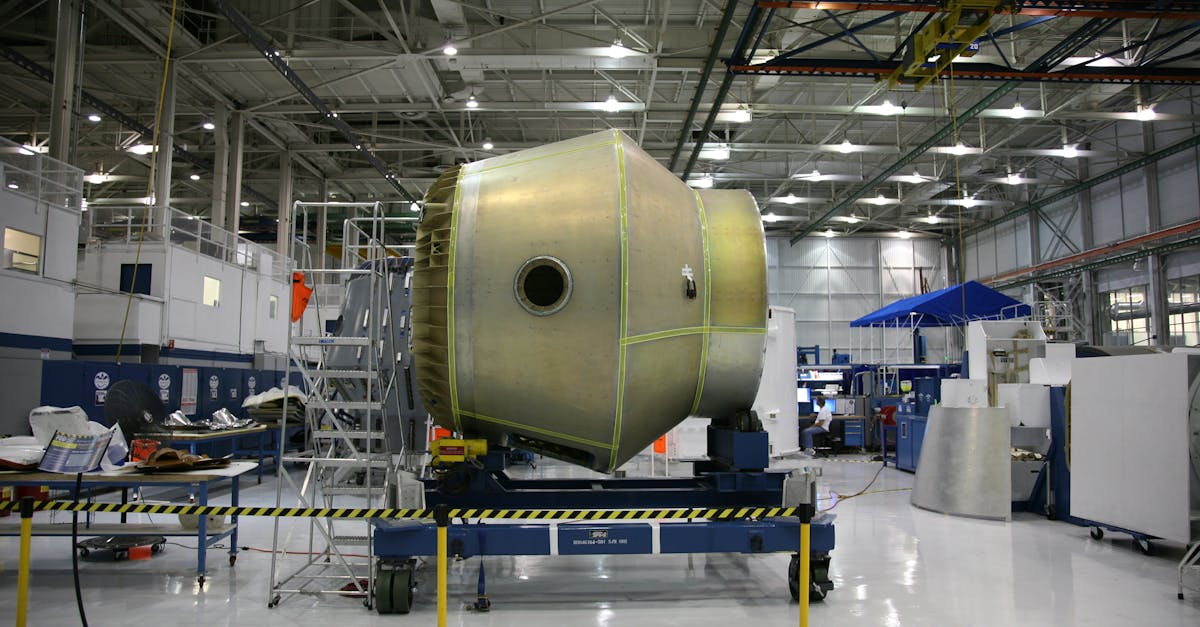
The production challenge requires advanced manufacturing processes familiar to aerospace engineers. Composites, with their high strength-to-weight ratio and design flexibility, have emerged as the material of choice for eVTOL construction, enabling weight reduction for longer flight times and increased payload capacity. The composites industry is experiencing a shift towards thermoplastics, necessitating a reevaluation of the supply chain to meet the demand for larger thermoplastic structures.
Joby Aviation is making investments to double its manufacturing capacity in the U.S. to support production of four aircraft per month in 2027, with the company disclosing more than $1 billion in potential aircraft and service sales. XPENG Aridge has begun trial production at its flying car plant in Guangzhou, marking the launch of the world’s first mass-production line for flying cars, with mass production and deliveries expected in 2026.
Automation is not just a desirable feature in eVTOL manufacturing; it’s a necessity for achieving the economies of scale required to meet the anticipated demand and make these aircraft commercially viable. The integration of AI-driven optimization to optimize designs, manufacturing processes, and maintenance operations reflects broader Industry 4.0 trends that manufacturing engineers are implementing across production environments.
What Regulatory and Safety Frameworks Are Shaping Advanced Air Mobility?
The FAA has completed updating its regulations to allow for aircraft in the powered-lift category to operate safely in the National Airspace System (NAS). This regulatory milestone enables the commercial deployment that manufacturers have been preparing for. Archer was recently selected for a specialized FAA integration pilot program, paving the way for early air taxi operations in Florida, New York, and Texas as soon as the second half of 2026.
The safety framework parallels aerospace manufacturing quality systems. Competency-Based Training and Assessment (CBTA) is a well-defined, data driven methodology that has emerged as a leading approach to both flight and maintenance training, and fundamental to the implementation of CBTA is the integration of this training methodology as a risk mitigation strategy when tied to a Safety Management System (SMS).
The FAA and other regulators are working together on certification of advanced air mobility (AAM) aircraft, with AAM described as a rapidly emerging new sector that aims to safely and efficiently integrate highly automated aircraft into the National Aerospace System—not a single technology, but rather a collection of new and emerging technologies. For manufacturing operations managers, this distributed regulatory approach offers lessons in managing complex certification across multiple jurisdictions—a challenge familiar to companies producing medical devices or automotive components for global markets.
The year 2026 marks a historic pivot for the aviation industry as eVTOL aircraft transition from experimental prototypes to certified commercial realities, with cities like Dubai, Bangkok, and Los Angeles inaugurating their first vertiports. The infrastructure requirements mirror the charging and logistics networks that automotive manufacturers are building for electric vehicles, suggesting potential synergies for companies working in AI-powered vehicle platforms.
Key Takeaway
The convergence of AI-driven training systems, competency-based assessment frameworks, and eVTOL manufacturing represents more than aviation innovation—it demonstrates how advanced data capture, automated analysis, and human-machine collaboration can address cognitive bottlenecks and production scale-up challenges across complex engineering domains. Manufacturing engineers and plant managers can apply parallel lessons: identify specific cognitive or physical tasks where automation provides measurable advantage, implement data collection systems that map observable outcomes to competency frameworks, and preserve human oversight for judgment-dependent decisions. As aviation training organizations prove that AI augments rather than replaces expert instructors while managing five-fold cognitive overload, similar approaches can optimize quality inspection, process control, and operator training in advanced manufacturing environments. The regulatory pathways being established for AAM and eVTOL certification also offer frameworks for managing safety-critical automation in other industries.
Frequently Asked Questions
Q: How does competency-based training differ from traditional task-based pilot training?
CBTA focuses on observable behaviors and measurable performance standards rather than repetitive task completion or fixed training hours. The system assesses pilots across eight to nine core competencies (including leadership, communication, and workload management) with dozens of observable behaviors within each category, enabling instructors to tailor training to individual weaknesses rather than applying one-size-fits-all curricula.
Q: What manufacturing challenges must eVTOL companies solve to reach commercial scale?
Manufacturers must implement automated composite fabrication for thermoplastic structures, achieve weight reduction through advanced materials while maintaining structural integrity, and scale battery production for 250+ mile ranges. Companies like Joby are targeting four aircraft per month by 2027, requiring supply chain coordination and quality systems comparable to aerospace manufacturing while managing costs to make air taxi services commercially viable.
Q: Can the AI systems used in aviation training be applied to manufacturing operator training?
Yes—the core principles translate directly. Aviation AI systems capture multi-modal data (video, audio, biometrics, equipment readouts), compare performance against defined standards, identify behavioral patterns, and provide structured feedback to instructors. Manufacturing environments can implement similar systems for complex assembly operations, quality inspection training, or equipment operation certification, particularly where instructor cognitive load limits effective observation and assessment.
Article Source: Expert Interview: AI, AAM, eVTOL…and More