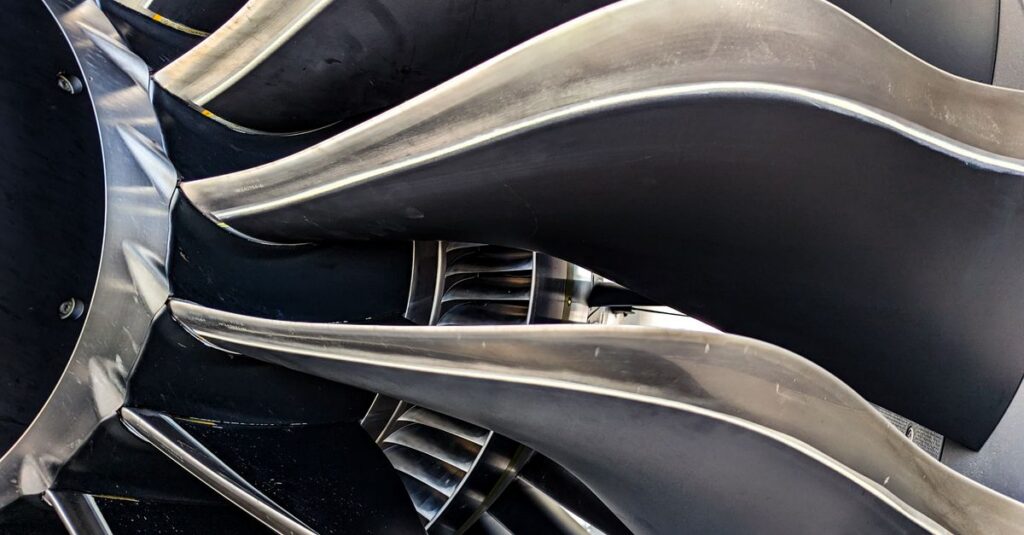
- Air Force cites production delays, quality issues, parts obsolescence in engine supply chain
- Annual demand projected to hit 180 engines by 2034 for F-15EX and F-16 fleets
- All 123 F135 engines in 2024 arrived 238 days late on average
- RFI responses due August 28; initiative mirrors 1970s Great Engine War
The Air Force warned in a business notice that the current industrial base has demonstrated “significant challenges, including production delays, quality control issues, and critical obsolescence (i.e., diminishing manufacturing sources and material shortages) across key engine components.” The multiyear acquisition initiative projects requirements exceeding 180 engines a year by 2034, covering both U.S. Air Force purchases and foreign military sales. The notice signals the service’s intent to open competition beyond the GE Aerospace and Pratt & Whitney duopoly that has controlled fighter engine production since the 1980s.
F135 delays illustrate broader manufacturing strain
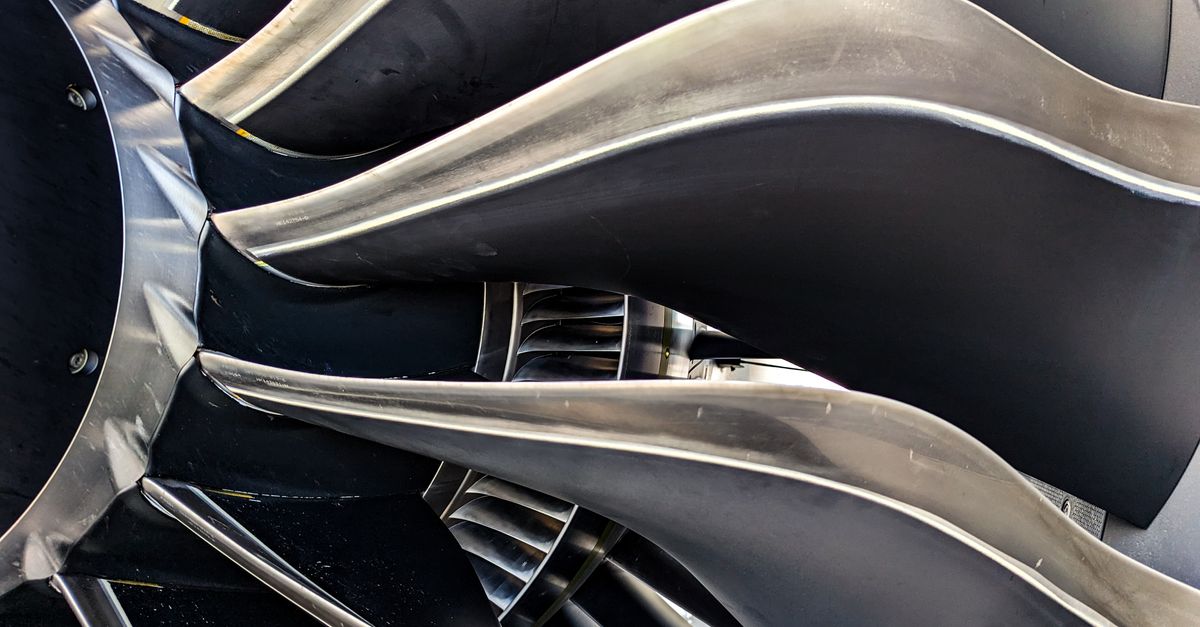
All 123 Pratt & Whitney F135 engines delivered for the F-35 in 2024 arrived late, by an average of 238 days, illustrating the depth of manufacturing strain across the propulsion sector. The F-15EX uses the General Electric F110-GE-129, which generates about 29,000 pounds of thrust. On F-16, operators can choose between the same F110-GE-129 and Pratt & Whitney F100-PW-229. The F110-GE-129 remains the only engine fully integrated and certified on the fly-by-wire F-15EX.
The Air Force notice requires delivery of engines that reduce instances of Mission Impaired Capability Awaiting Parts (MICAP)—when equipment cannot perform its mission because it is waiting on a critical part. Reducing MICAP events translates directly to higher mission-capable rates, a metric where many Air Force aircraft types currently operate in the 50–60% range.
Specialized materials and processes constrain production
Manufacturers are being asked to identify potential risks involving specialized titanium and nickel alloys, advanced casting capabilities, forging capacity, and other manufacturing bottlenecks that could limit production growth. Achieving modern engine performance levels requires advanced materials like single-crystal superalloys and ceramic matrix composites, plus manufacturing processes precise to thousandths of an inch. The Air Force’s request for information does not prescribe a specific architecture, leaving open whether responses should propose new variants, upgraded designs, or clean-sheet solutions.
The historical parallel matters. The initiative mirrors the 1970s-80s “Great Engine War,” which ended Pratt & Whitney’s F100 monopoly and produced GE’s F110 engine. That competition emerged after Pratt & Whitney’s F100 engine suffered from a flaw called stall-stagnation that could cause catastrophic flameouts. Critics note that dual-source programs carry hidden costs: reduced economies of scale, duplicate logistics and longer learning curves are often factored in, and fielding two engine designs means two sets of spares, tooling and technical data to sustain.
Lifecycle cost and resilience outweigh acquisition price
Rather than awarding contracts solely based on acquisition cost, the Air Force intends to evaluate a producer’s lifecycle cost, reliability, maintainability, production stability, and supply chain resilience. The shift reflects lessons from the F-35 engine experience, where a Government Accountability Office report noted that “the engine contractor is still not delivering engines to contract specifications after 20 years of production.” Responses are due by 2 pm EDT on August 28, 2026.
The competition arrives as broader fighter production capacity strains under demand. Lockheed delivered only 97 F-35s in 2023 due to software certification delays and supply chain shortages, meeting less than two-thirds of the planned annual total. The challenge for any new entrant will be developing manufacturing infrastructure capable of producing engines that operate at temperatures exceeding 2,500°F while meeting Air Force delivery schedules—infrastructure the incumbents already possess but have struggled to scale. That dynamic suggests the most likely outcome is sharpened competition between GE and Pratt & Whitney rather than emergence of a third supplier, unless the Air Force commits to volume guarantees sufficient to justify the multi-billion-dollar capital investment required for turbine blade foundries and test facilities.
The Air Force’s request signals a fundamental shift from cost-focused procurement to supply chain resilience and lifecycle performance. Responses due August 28 will determine whether new manufacturers can credibly challenge the GE-Pratt duopoly or whether competition simply forces the incumbents to improve delivery and quality metrics. For allied air forces dependent on F-15 and F-16 engines through foreign military sales, the outcome directly affects aircraft availability and procurement costs already strained by post-pandemic inflation.
What is MICAP and why does it matter for fighter readiness?
Mission Impaired Capability Awaiting Parts (MICAP) occurs when aircraft cannot fly missions because critical components are unavailable. High MICAP rates directly reduce mission-capable percentages, which currently sit at 50–60% for many Air Force aircraft types. The new engine competition specifically requires manufacturers to reduce MICAP incidents through improved parts availability and supply chain design.
Can new manufacturers realistically compete against GE and Pratt & Whitney?
Entry barriers are extreme. Fighter engines require single-crystal turbine blades, specialized superalloys, and manufacturing precision measured in thousandths of an inch—infrastructure that demands multi-billion-dollar investments. Without Air Force volume guarantees exceeding 180 engines annually, new entrants face prohibitive financial risk. The 1970s Great Engine War succeeded because the Air Force funded GE’s development; similar federal investment may be necessary to break the current duopoly.
Article Source: USAF Looks For Answers To Remedy Supply Bottlenecks For F-15EX and F-16 Engines