- Humanoid robots demonstrate balance recovery while running down stairs using MPC controllers
- Deep Robotics and academic labs showcase advanced bipedal stability algorithms
- Physical AI deployments accelerate with new motor control frameworks
- Industrial applications focus on reliability and real-world disturbance rejection
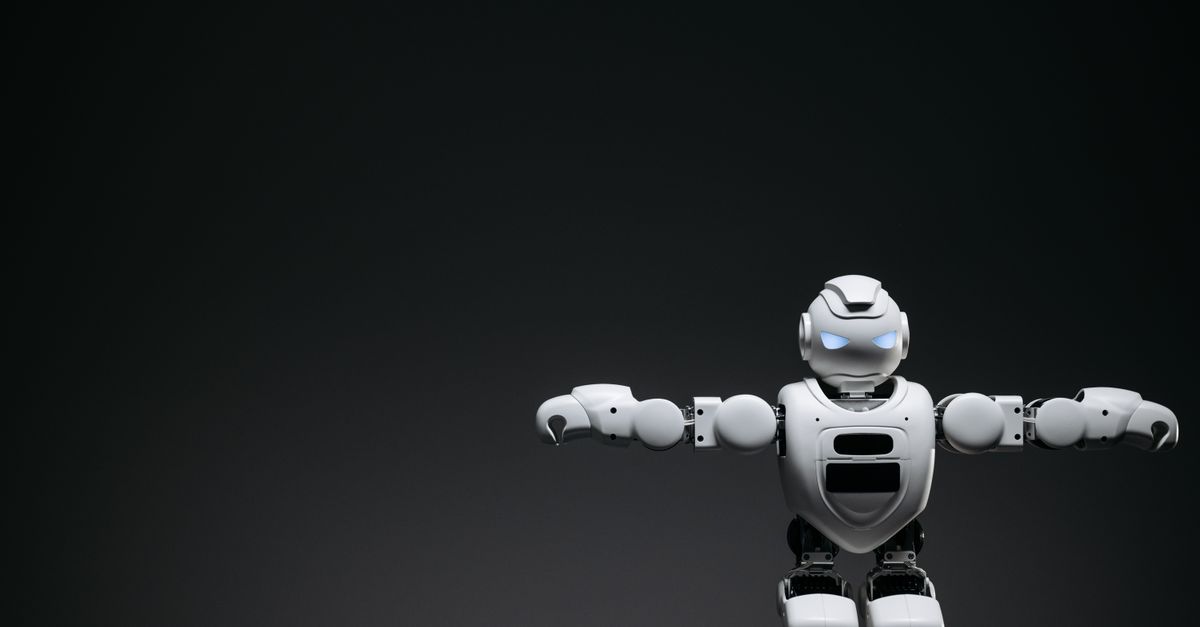
Recent demonstrations from Deep Robotics and university research teams have showcased humanoid robots successfully recovering from balance disturbances while running down stairs, highlighting significant progress in model predictive control (MPC) systems. These recovery demonstrations represent notable advances in bipedal robotics, though questions remain about repeatability versus chance outcomes. The technology matters to manufacturing professionals because humanoid robots are performing real work on factory floors in 2026, though only at pilot sites for narrow task sets.
How Does Model Predictive Control Enable Balance Recovery?
MPC-based balance controllers have become the dominant approach for enabling humanoid robots to maintain stability during dynamic movement. Model Predictive Control (MPC) approaches maintain the Zero Moment Point (ZMP) or Center of Pressure (CoP) within the support polygon, using methods based on controlling the Capture Point (CP). A new real-time planning and control framework enables bipedal robots to autonomously recover balance on unpredictable terrain, with testing on the Cassie robot showing stability recovery improved by 81%.
The three bio-inspired strategies used for balance recovery of biped robots are ankle, hip, and stepping strategies, with balance recovery also achieved by modulating angular momentum of the upper body or the Zero Moment Point when stepping is not possible. The computational performance has improved dramatically: ReLU-QP demonstrates speed improvements of up to 20 times for whole-body Atlas stabilizing tasks. For industrial settings, this translates to faster reaction times and more reliable operation in human-designed workspaces.
What Role Does Physical AI Play in Motor Control?
Physical AI is ready for mainstream deployment due to convergence of technologies impacting how robots perceive their environment, process information, and execute actions in real time. Motor control becomes a foundational element of physical AI, as intelligence only manifests when something moves, whether it’s a robotic arm positioning a part or a collaborative robot reacting to human proximity.
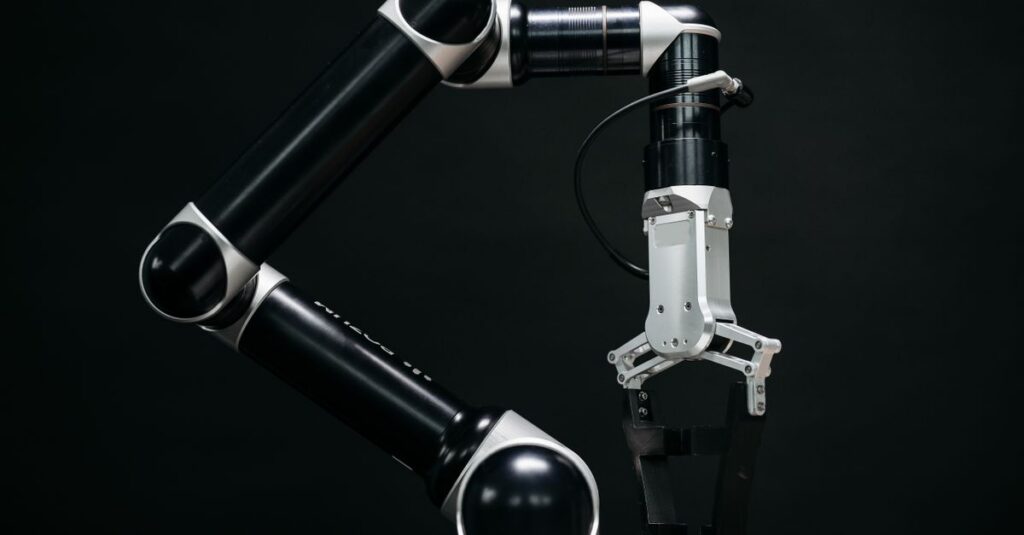
Robot foundation models, or AI brains trained on broad data to handle perception and motor control across varied tasks, are scaling rapidly. Industrial deployments are benefiting from this: Physical AI can reason probabilistically, but robot execution must be deterministic, with platforms providing real-time motion and force control with integrated feedback loops. This integration is particularly important for manufacturers seeking to deploy humanoid systems alongside traditional automation, as it ensures predictable, safe operation in contact-rich applications.
Where Are Humanoid Robots Being Deployed in Manufacturing?
As of 2026, documented industrial deployments include Figure AI’s pilot at a BMW Group facility for material handling and parts transfer, and Agility Robotics’ Digit in Amazon fulfillment centers for tote handling, covering a narrow range of material handling tasks rather than high-speed, high-precision assembly processes. Boston Dynamics unveiled its Electric Atlas at CES 2026, a high-performance humanoid designed for industrial tasks from material handling to order fulfillment, marking a shift toward real-world deployment.
Industrial-grade reliability on uneven surfaces, wet floors, or environments with obstacles remains an unsolved problem, with some companies choosing wheels over legs as a trade-off. Reliability and efficiency are key to success: humanoid robots need to match high industrial requirements for cycle times, energy consumption and maintenance costs, while achieving human-level dexterity and productivity to fill labor gaps. For plant managers evaluating automation roadmaps, tasks requiring sub-millimeter repeatability, payload above 10 kg, or consistent performance at automotive production cycle rates are not realistic near-term applications.
Balance recovery demonstrations in 2026 showcase real technical progress, but manufacturing professionals should evaluate humanoid robots as complementary to traditional automation rather than replacements. MPC-based controllers and physical AI frameworks are delivering measurable improvements in stability and adaptability. However, for tasks requiring precision, speed, and proven reliability at automotive production rates, fixed industrial robots remain the appropriate choice. Pilot programs in material handling and logistics represent the most realistic near-term deployment path, particularly for operations where human-designed workspaces and flexibility outweigh cycle time requirements.
Q: Can humanoid robots actually replace traditional industrial robots on production lines in 2026?
No, not for most applications. Humanoid robots in 2026 operate at a handful of pilot sites performing material handling and simple transfer tasks, not high-speed assembly. Traditional industrial robots achieve repeatability of ±0.02–0.05 mm and cycle times several times faster than humanoids, with decades of reliability data. Humanoids are best suited for flexible environments where bipedal mobility adds genuine value, such as navigating human-designed aisles in warehouses attached to manufacturing facilities.
Q: What is the current reliability of MPC-based balance controllers in real-world conditions?
Recent research shows significant progress, with some systems achieving 81% stability recovery improvements in controlled tests. However, one stair-climbing robot study achieved only a 69.4% success rate, falling short of IEC 61508 safety standards for standalone safety functions. Industrial deployments require additional compensating measures such as mechanical brakes and upstream fail-safes before reaching full deployment readiness in uncontrolled environments.
Article Source: Video Friday: Watch This Running Robot Not Fall Down Stairs