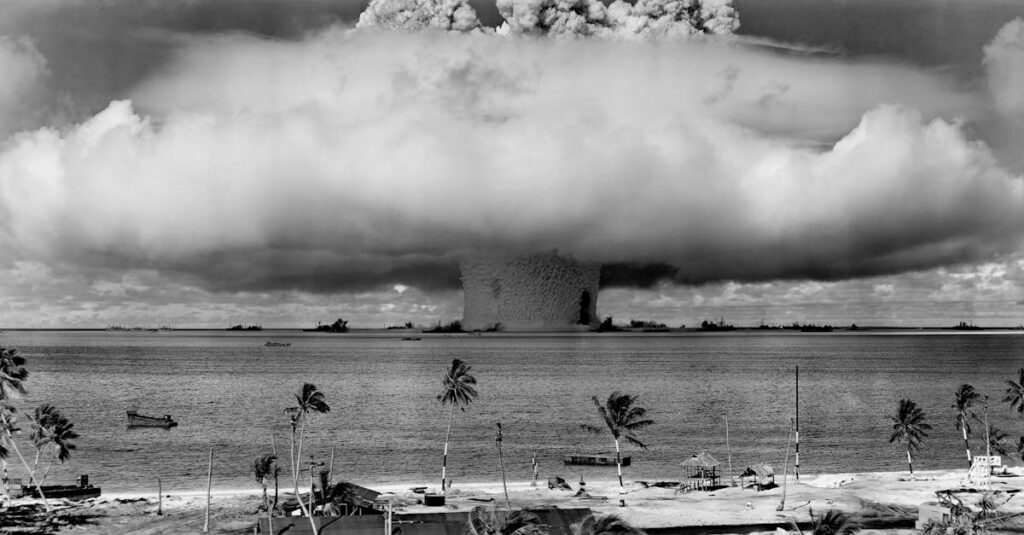
Previously lost photographic documentation from the Trinity nuclear test, the world’s first atomic bomb detonation on July 16, 1945, has been digitally restored and made available to researchers and historians. The recovered imagery provides unprecedented visual clarity of the pivotal weapons test that ushered in the nuclear age, offering engineering professionals enhanced data on blast dynamics and explosive physics.
The restoration effort recovered footage that had deteriorated significantly over eight decades of storage. Advanced digital techniques were employed to stabilize, enhance, and preserve the historical technical documentation, which captures critical milliseconds of the plutonium-based implosion device’s detonation near Alamogordo, New Mexico.
Technical Significance for Modern Applications
The enhanced visual records hold particular value for contemporary nuclear safety engineers, materials scientists, and weapons systems analysts. The imagery documents blast wave propagation, thermal radiation patterns, and structural responses under extreme conditions—phenomena that remain relevant to current containment system design and safety protocol development.
For professionals working in high-energy physics and extreme environments engineering, these restored images provide baseline data for computational model validation. The Trinity test represented a yield of approximately 25 kilotons, and the restored documentation captures previously obscured details of fireball expansion rates and shock wave characteristics.
Preservation Implications
The successful restoration underscores ongoing challenges in technical archive management. Film-based scientific documentation from mid-20th century weapons programs continues to degrade, raising concerns about irreversible data loss from critical engineering experiments that cannot be ethically or practically replicated.
Key Takeaway
Engineering organizations maintaining historical technical archives should prioritize digitization of deteriorating photographic and film records. The Trinity restoration demonstrates that advanced imaging techniques can recover valuable scientific data, but intervention must occur before physical media degradation becomes irreversible. Professionals in nuclear engineering, materials science, and defense sectors should access these resources through IEEE archives for reference applications.
Article Source: Striking New Views of the First Atomic Bomb Test | Image: Photo by Pixabay via Pexels