
While global manufacturers installed 542,000 robots in 2024—more than double the number 10 years ago, a counterintuitive reality is emerging: robotic systems increasingly bring people into the manufacturing workforce rather than displace them. Japan’s DAWN café, operated by robots remotely controlled by people with disabilities such as ALS and Spinal Muscular Atrophy, demonstrates this human-centered approach is now expanding from service industries into manufacturing operations. For plant managers and engineers facing persistent labor shortages, this shift reframes the central automation question from replacement economics to workforce augmentation strategy.
Collaborative robots are tools used to augment and enhance the capabilities of the workforce, yet manufacturers still struggle with fundamental technical barriers that prevent seamless human-robot integration. The roadmap to effective collaboration depends less on advanced hardware than on bridging critical knowledge and infrastructure gaps that exist on today’s factory floors.
Why Can’t Most Manufacturers Deploy Autonomous Robots Today?
The technical obstacles blocking widespread robot autonomy are more fundamental than many executives realize. Heavy reliance on manual data collection introduces errors and delays, with around a third of firms reporting key decision-making processes are mostly manual. This creates a foundational problem: robots cannot replicate processes that haven’t been properly captured and documented.
The challenge splits into two distinct technical layers. First, manufacturers must capture not just what operators do, but why they execute tasks in specific ways—knowledge that has often become instinctual after years of practice. Second, this tacit knowledge must be translated into formats robots can execute. While automated systems are equipped with sensors and advanced analytics, manual workflows remain unmonitored, unanalyzed, and unoptimized, creating blind spots in exactly the processes manufacturers most need to understand before automating.
Motion sensors connected to generative AI systems have accelerated progress on the translation challenge, but the knowledge-capture problem persists. The operators with the deepest process expertise work on the factory floor, and their experience exists primarily in physical muscle memory rather than documented procedures. Without solving this knowledge-transfer bottleneck, even sophisticated robotic systems cannot move beyond executing basic repetitive tasks.
How Should Manufacturers Rethink Their Automation Strategy?
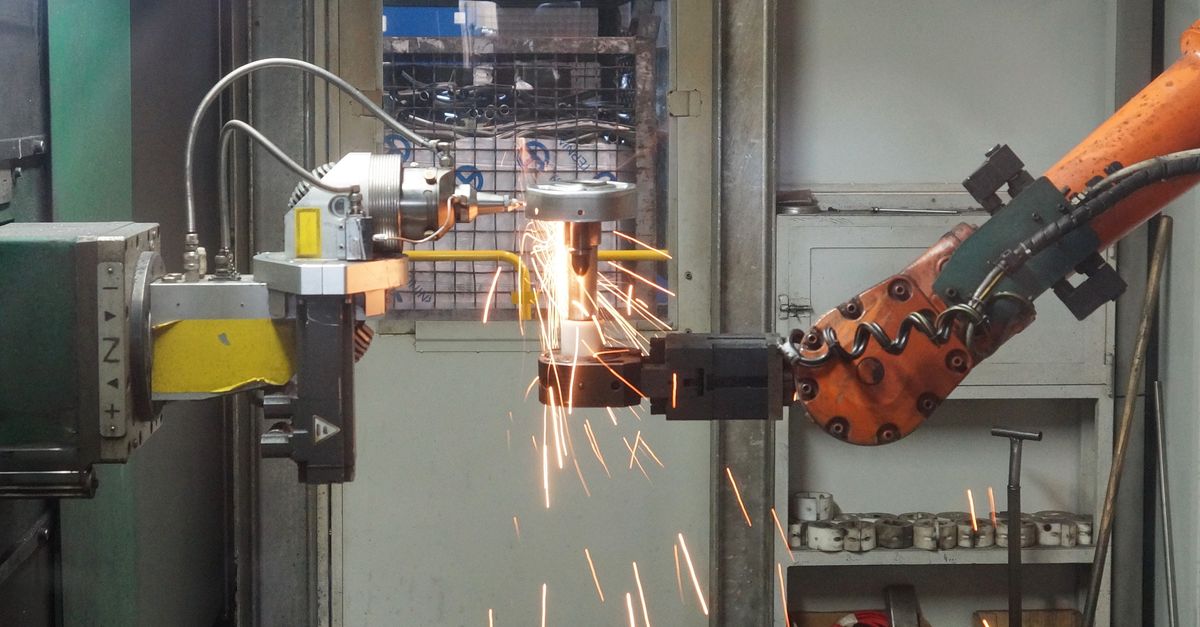
Rather than pursuing full autonomy, leading manufacturers are adopting collaborative frameworks where robots handle lower-stakes repetitive work while humans focus on strategic oversight. Collaborative robots in manufacturing are designed to augment human workers, not replace them, typically taking over the most repetitive, strenuous, and dangerous tasks and allowing employees to move into more skilled roles like quality control, machine programming, or supervision.
This approach addresses manufacturing’s evolving skill requirements. The workforce capabilities that matter most in robot-augmented environments are strategic thinking, problem-solving, and systems design—precisely the skills needed to redesign processes around advanced robotics. Manual capacity freed from repetitive tasks gets redirected toward vendor relationships, compliance management, and AI architecture decisions.
Reskilling, upskilling, and craftsmanship are key to sustain the journey towards Industry 5.0, with human-robot collaboration envisioned as a cornerstone of resilient, sustainable, and human-centered industry. The remote-operation model pioneered by Japan’s DAWN café, which employs over 80 pilots from across the country controlling OriHime robots from their homes, shows how teleoperation can expand the available labor pool to include people previously unable to participate in traditional manufacturing roles.
What Infrastructure Changes Are Required?
Preparing facilities for AI-powered systems and robot collaboration requires fundamental workflow reconfiguration from the ground up. Robots bring speed, precision, and consistency while people bring judgment, creativity, and adaptability—a strong factory layout accounts for both. This means redesigning workstations to support collaborative cells with visual dashboards and sensor-fed alerts that give operators control while automation handles physically demanding tasks.
Data infrastructure presents the most urgent challenge. Manufacturers need integrated systems that connect manual workflows with enterprise platforms, capturing process knowledge as work happens rather than attempting to document it afterward. The goal is creating what Industry 5.0 researchers call “human-machine symbiotic” systems—environments where robots are no longer just tools, but intelligent agents that can evolve with human operators.
Physical presence will remain essential for certain manufacturing processes, particularly those requiring human judgment in variable conditions. The strategic question isn’t whether robots will handle more tasks—they will—but how manufacturers can structure their operations so automation amplifies rather than replaces human capabilities.
The path forward for manufacturing automation is not wholesale replacement but strategic augmentation. Plant managers should prioritize capturing operator knowledge through digital workflow tools before investing in advanced robotics, then deploy collaborative systems that handle repetitive physical tasks while redirecting human workers toward process design, quality oversight, and strategic decision-making. The manufacturers that succeed will be those that view robots as workforce multipliers rather than workforce replacements—creating roles for people who might otherwise be excluded from traditional factory work while elevating existing employees into higher-value positions.
Q: What percentage of manufacturers still rely on manual data collection?
Around 70% of manufacturers still capture data manually, with approximately a third reporting that key decision-making processes are mostly manual. This data gap represents the primary barrier preventing most facilities from deploying autonomous robotic systems effectively.
Q: Can collaborative robots actually create manufacturing jobs rather than eliminate them?
Yes, when properly deployed. Studies indicate the growth of robotics use in general has led to net increases in manufacturing employment and factory output worldwide. Collaborative robots free skilled workers from repetitive tasks to focus on programming, supervision, and process optimization—higher-value roles that didn’t exist before automation. Additionally, teleoperation models enable remote workers, including those with disabilities, to control factory robots from home.
Article Source: Robots can enhance manufacturing workers rather than replace them