- Neural network evaluated 16 structural descriptors for supercooled water at University of Osaka
- AI identified most effective methods to distinguish high-density and low-density liquid states
- Research published in Communications Chemistry provides unified comparison framework
- Two-state model confirmed at critical point of -63°C and 1000 atmospheres
Researchers at the University of Osaka used an AI model trained on computer simulations to evaluate 16 different structural descriptors that scientists have developed over decades to characterize water’s molecular behavior. LSI and ζ were identified as highly efficient descriptors for characterizing local structural changes in supercooled water, ending years of debate over which measurement methods work best. The breakthrough addresses a problem that has stymied water researchers: each descriptor was created independently using different scales and dimensions, making direct comparison impossible.
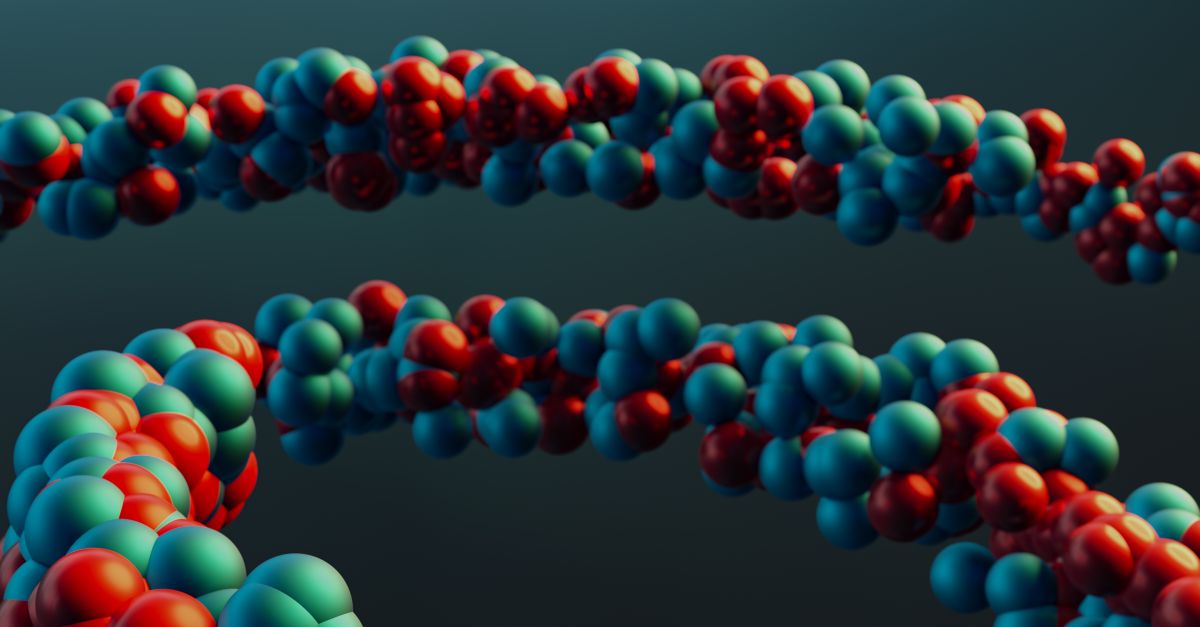
The anomalous behavior of liquid water is widely associated with a liquid-liquid phase transition between high- and low-density states in the supercooled regime. At the microscopic level, tetrahedral hydrogen-bond networks govern these properties, but quantifying these networks has been difficult without a systematic evaluation framework.
Neural network compared 16 competing methods
The researchers fed the neural network structural data generated from molecular dynamics simulations of supercooled water. Through repeated trial and error, the system learned to recognize meaningful patterns in the molecular structures. Lead researcher Kang Kim and senior author Nobuyuki Matubayasi trained the AI to predict temperature from molecular configurations, effectively teaching it which structural features matter most.
The network used what it had learned to compare how 16 descriptors differentiated between LDL and HDL structures at different temperatures. These structural descriptors quantify features such as tetrahedral order, local density, and the separation between the first and second coordination shells. The unified framework gave researchers their first objective assessment of which tools actually capture water’s structural transitions.
In March 2026, researchers at Stockholm University used advanced x-ray lasers to uncover a long-suspected feature of water: a critical point that appears when water is deeply supercooled. This occurs at about -63°C and 1000 atmosphere. The Osaka team’s descriptor framework now gives scientists standardized tools to study exactly what happens at that critical point.
Supercooled water exists below -50°C without freezing
Under the right conditions, including high purity or being housed in a smooth container, water will remain a liquid well below 0 degrees Celsius. At temperatures below negative 50 degrees Celsius, a slight disturbance can cause supercooled liquid water to rapidly crystallize into ice, making it very difficult to study experimentally. This instability is why computational models and simulation-trained AI have become essential research tools.
Anomalies have been explained in terms of a transition between two competing states, a high-density liquid (HDL) and a low-density liquid (LDL). The two states don’t mix like oil and water, except both are water with different molecular packing densities. As the supercooled water approached the critical point, the entire system suffered from a phenomenon known as “critical slowing down.” The molecular motions became extraordinarily sluggish. The researchers noted that the structural variations extended out to a full microsecond—an unusually long timescale for molecular dynamics.
Validated descriptors improve thermal system models
The researchers say their framework could improve scientists’ understanding of how microscopic structural changes are connected to the thermodynamic behavior of water. The findings may also help explain the origin of water’s unusual properties while guiding the development of even better tools for studying its complex molecular structure. For engineers working with liquid cooling systems or cryogenic equipment, accurate water models matter: prediction errors in heat transfer calculations compound quickly when systems operate near phase transitions.
The descriptor framework also creates opportunities for materials engineers working with aqueous solutions at extreme conditions. Deep eutectic solvents—mixtures like reline (urea and choline chloride) that have large scale industrial use—depend on understanding how additives disrupt hydrogen-bonded water networks. Validated structural descriptors let engineers predict solvent behavior without running expensive pilot tests for every temperature and pressure combination. This is particularly relevant for thermal management in autonomous systems where water-based coolants must perform reliably across wide temperature ranges without human intervention.
The Osaka team’s validation of LSI and ζ descriptors gives thermal engineers and materials scientists a standardized way to evaluate water behavior in simulation before physical testing. This matters most for systems operating near water’s anomalous temperature regions—roughly -50°C to 4°C—where density, viscosity, and thermal conductivity don’t follow normal patterns. If your cooling system, cryogenic process, or pharmaceutical formulation works in that range, validated descriptors reduce the risk that your computational fluid dynamics model is using the wrong structural assumptions. The research was published in Communications Chemistry with DOI: 10.1038/s42004-026-02097-1.
Why does supercooled water matter for industrial applications?
Supercooled water appears in aircraft icing, cryogenic storage systems, and precision thermal management equipment. Understanding liquid states of water at very low temperatures is important for earth sciences and biology but is difficult because supercooled liquid water is very unstable. Better structural models let engineers predict when ice nucleation will occur and design systems that either prevent or control crystallization depending on the application.
What makes structural descriptors important for water modeling?
Because these structural descriptors were created independently, they rely on different scales, dimensions, and types of information. That has made it difficult to directly compare them and determine which ones provide the clearest picture of water’s behavior. The neural network framework solves this by testing all descriptors against the same simulation data, giving engineers confidence that their chosen descriptor actually captures the physics they care about.
Article Source: Scientists used AI to crack one of water’s biggest mysteries