
- Europe’s Chips Act 2.0 shifts focus from manufacturing capacity to ecosystem indispensability.
- Spain mobilizes €12.25 billion to develop design, fabrication, and research capabilities.
- New strategy emphasizes demand creation, not just supply-side fab investments.
- Revised framework targets advanced chip design, photonics, and industrial AI strengths.
Europe’s semiconductor strategy is undergoing a fundamental recalibration. The European Commission’s proposed Chips Act 2.0, introduced in June 2026, introduces new measures to further boost the chips industry, reduce strategic dependencies and support advanced chip production in the EU. This shift comes after the original 2023 Chips Act, which focused heavily on attracting fabrication plants, fell short of its targets. The Chips Act 2 should pursue technological sovereignty through indispensability by building on and defending European strengths in semiconductors. For manufacturing professionals, this strategic pivot signals a new approach to industrial planning—one that prioritizes ecosystem control over production volume alone.
What Changed Between Chips Act 1.0 and 2.0?
The original European Chips Act aimed to double the EU’s global semiconductor market share to 20% by 2030 through massive investments in manufacturing capacity. The first Chips Act, introduced in response to pandemic-era supply disruptions, was designed to boost Europe’s semiconductor manufacturing capacity and aimed to increase the EU’s share of global chip production to 20% by 2030 through public and private investment. A central element of the Act was the intention to attract large fabrication plants and strengthen overall production resilience. To date, progress has been uneven with Europe still heavily reliant on external suppliers for advanced chips and struggling to meet its original targets. The cancellation of major fab projects, including Intel’s planned German mega-facility, exposed the limits of this approach.
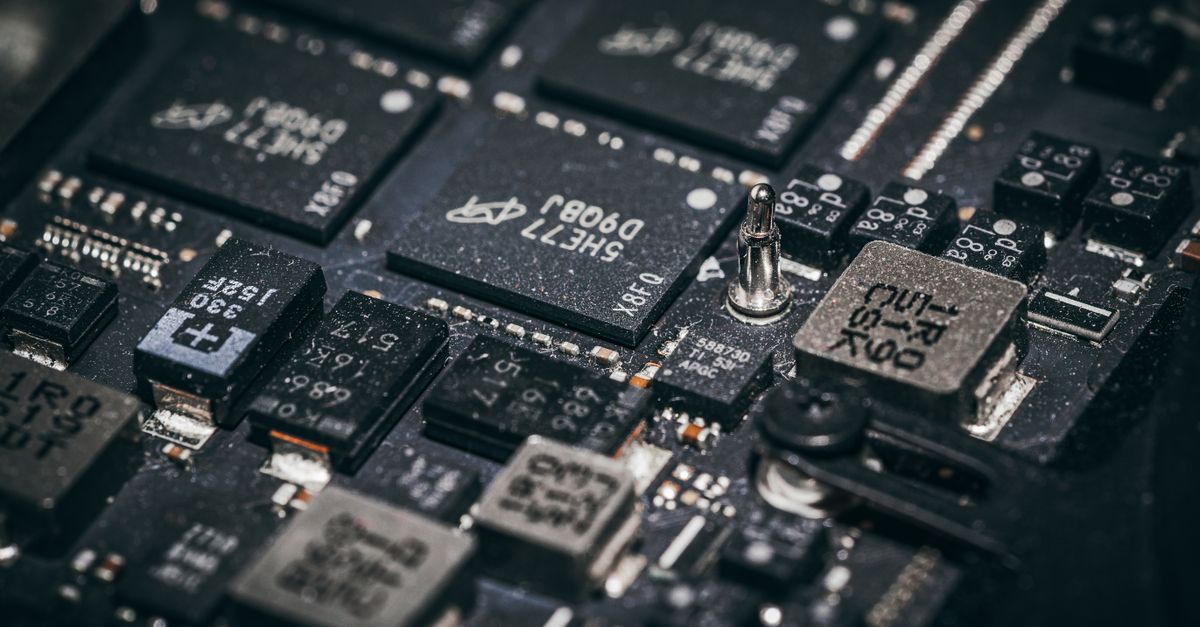
At its core, Chips Act 2.0 looks to shift the focus from manufacturing capacity alone to the development of a complete semiconductor ecosystem. Rather than competing directly with Asian and American manufacturing scale, the revised strategy capitalizes on European strengths. The European Commission appears to be prioritizing strategic leverage across the semiconductor ecosystem — from lithography systems and industrial chip design to advanced packaging, photonics and edge AI infrastructure. This includes technologies where Europe already holds dominant positions, such as ASML’s lithography equipment, power semiconductors from companies like Infineon and STMicroelectronics, and advanced photonics research.
One of the notable evolutions of the proposed Chips Act 2.0 is the increased emphasis on demand-side measures. While the original Chips Act primarily focused on strengthening manufacturing and research capabilities, the new proposal seeks to better align European semiconductor production with the needs of strategic industries and emerging markets. The Commission highlights that stronger demand can reinforce local production, improve industrial resilience, and support the commercialisation of innovative European technologies. This includes connecting chip manufacturers with automotive, cloud computing, and industrial automation sectors through demand aggregation mechanisms.
Why Does Spain’s €12.25 Billion Investment Matter?
Spain has emerged as a critical player in Europe’s semiconductor recalibration, committing substantial resources across the entire value chain. Spain’s national semiconductor strategy, managed through SETT under the PERTE Chip, follows a four-component framework that covers the entire value chain of the industry. As mentioned, the plan mobilises around €12.25 billion in public investment through 2027, aiming to strengthen Spain’s position in the European semiconductor ecosystem. Unlike other European initiatives focused narrowly on fabrication, Spain’s approach encompasses design, research, manufacturing, and packaging.
The Spanish strategy includes several groundbreaking initiatives. Expanding research capacity in microelectronics and photonics by supporting universities, national laboratories, and innovation centers. Promoting open and collaborative chip design, including RISC-V architectures, to build Spain’s domestic design ecosystem. Developing large-scale fabrication facilities. Such as the planned 300 mm wafer center in Málaga, created in partnership with IMEC. The Málaga facility represents a significant European investment in advanced semiconductor manufacturing infrastructure, with Spain working with IMEC (Interuniversity Microelectronics Centre), a leading European research center for nanoelectronics, to establish a semiconductor manufacturing hub in Málaga with an initial investment of €100 million.
Spain’s Catalonia region has become a particular focal point. It is also the fifth-ranked region in the EU in terms of jobs created and the eleventh in investment volume in semiconductors attracted since the announcement of the European Chip Act (2022). Catalonia, positioning itself as the preferred destination in Spain, concentrates 66.7% of the projects, 70.7% of the jobs created, and 40.3% of the invested capital. This concentration of talent, infrastructure, and investment demonstrates how regional semiconductor ecosystems can develop rapidly when supported by coordinated national and European funding mechanisms.
What Does This Mean for Manufacturers and Supply Chains?
The strategic shift from manufacturing self-sufficiency to ecosystem indispensability carries significant implications for industrial operations across Europe. The Chips Act 2.0 aims to strengthen Europe’s semiconductor industry and reduce strategic dependencies, boost demand for chips, and support the design and production of advanced and mainstream chips in the EU. For plant managers and engineers, this means access to a broader range of European-designed and European-manufactured components, particularly in automotive, industrial automation, and power electronics applications where European suppliers already hold strong positions.
The emphasis on demand creation introduces new procurement opportunities. Creating synergies with the Cloud and AI Development Act to benefit from demand for European chips stemming from the growth of sectors such as data centers, cloud service providers, and AI Gigafactories. Enabling State aid funding for “First-of-a-Kind” projects not yet present in the Union for the whole semiconductor value chain, from raw materials to packaging. This could accelerate the availability of specialized chips for smart manufacturing applications and edge computing deployments in industrial settings.
However, challenges remain. Delivering semiconductor facilities at scale requires a large, highly skilled workforce, yet Europe faces a significant shortage of qualified professionals. Demand for engineers, project managers, and trades such as electricians and welders is outpacing supply. With labour markets already stretched, fab projects must compete with rapidly expanding sectors like renewable energy, data centres, and infrastructure development. Manufacturing organizations may need to invest in workforce development programs and compete for talent across multiple high-tech sectors simultaneously.
Europe’s Chips Act 2.0 represents a pragmatic pivot from pursuing manufacturing scale to leveraging technological chokepoints. For engineers and plant managers, this means Europe will prioritize maintaining dominance in equipment, design tools, photonics, and power semiconductors rather than competing on volume production. Organizations should assess how this shift affects component sourcing strategies, particularly for automotive and industrial applications where European suppliers remain strong. The emphasis on demand-side measures and regional ecosystems like Spain’s PERTE Chip initiative may create new opportunities for public-private partnerships and preferential access to European-manufactured specialty chips. However, workforce shortages and permitting delays remain critical bottlenecks that could slow implementation across the continent.
Q: How will the Chips Act 2.0 affect component availability for industrial automation projects?
The revised strategy emphasizes power semiconductors, sensors, and microcontrollers where European suppliers like Infineon, STMicroelectronics, and NXP already hold strong positions. Demand aggregation mechanisms may improve access to European-manufactured chips for automotive and industrial applications, though lead times will depend on successful fab construction and workforce availability. The focus on “First-of-a-Kind” projects across the value chain should gradually expand domestic production options for specialized components.
Q: What makes Spain’s semiconductor strategy different from other European initiatives?
Spain’s €12.25 billion PERTE Chip program covers the entire value chain from design through fabrication and packaging, rather than focusing solely on manufacturing. The partnership with IMEC for a 300mm wafer facility in Málaga, combined with investments in open-source RISC-V design and photonics research, creates a more balanced ecosystem. Catalonia’s concentration of 66.7% of Spanish semiconductor projects demonstrates effective regional coordination that other member states are now studying as a model.
Article Source: Inside Europe’s Chip Rethink: Why Fabs Weren’t Enough and Why Spain Matters