- Standard Bots secures $200M Series C at $1B valuation
- Expansion targets 70,000 sq ft New York facility
- Company aims for 10% U.S. industrial robot deployments
- Focus on AI-native robotics with demonstration-based learning
Standard Bots has closed a $200 million Series C funding round led by RoboStrategy and existing investors, achieving unicorn status with a $1 billion valuation. The company will use the capital to expand its Glen Cove, New York manufacturing facility to 70,000 square feet, scaling American-made robot production as demand accelerates for domestically produced automation systems.
The funding comes at a pivotal moment for U.S. manufacturing. China installed 295,000 industrial robots in 2024, nearly nine times more than the United States, while China operates over 2 million factory robots compared to roughly 393,700 in the U.S. This disparity has prompted calls from industry leaders and policymakers for a coordinated national response to maintain competitiveness in advanced manufacturing.
How Does Standard Bots’ AI-Native Approach Differ From Traditional Industrial Robots?
Standard Bots’ foundation models allow operators to show robots what to do, and the system generalizes across variations without programming. This demonstration-based learning eliminates the need for traditional coding expertise, addressing one of the biggest barriers to robot adoption in small and mid-sized manufacturing operations. The company’s Physical AI (artificial intelligence) technology, developed on the NVIDIA Isaac platform, enables users to train robots through demonstration rather than traditional programming.
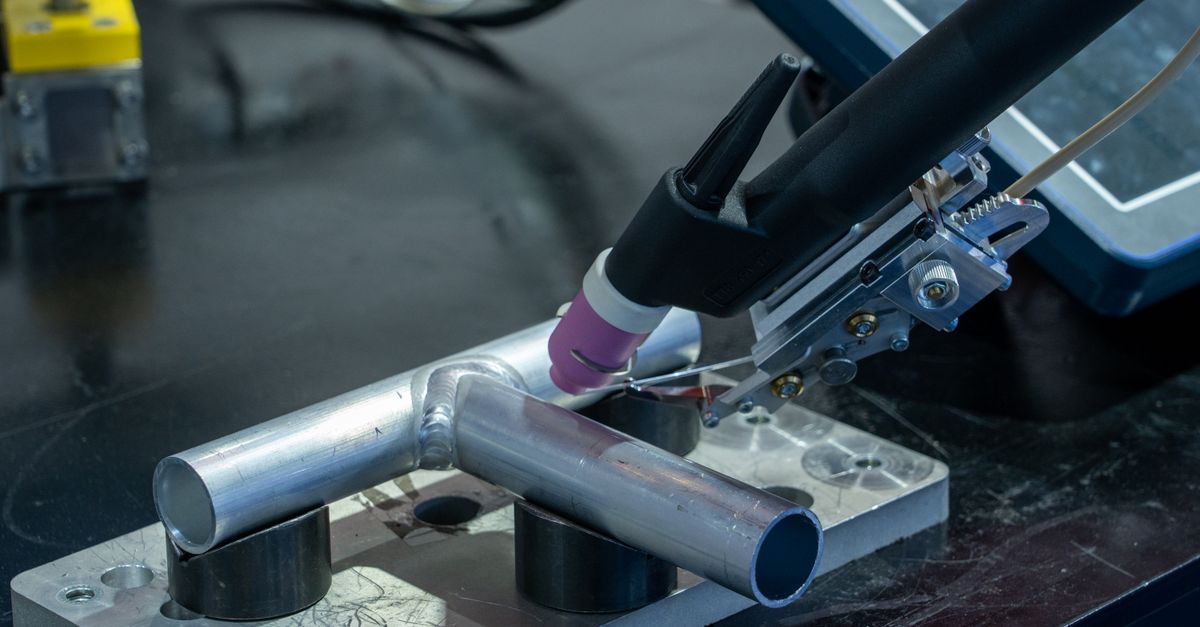
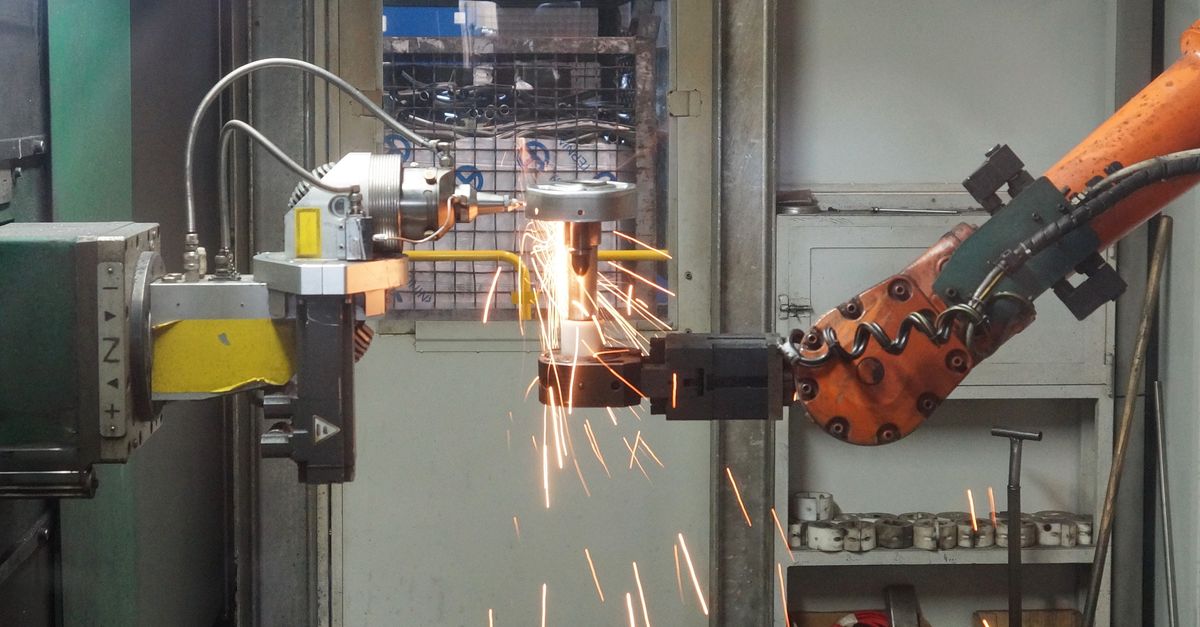
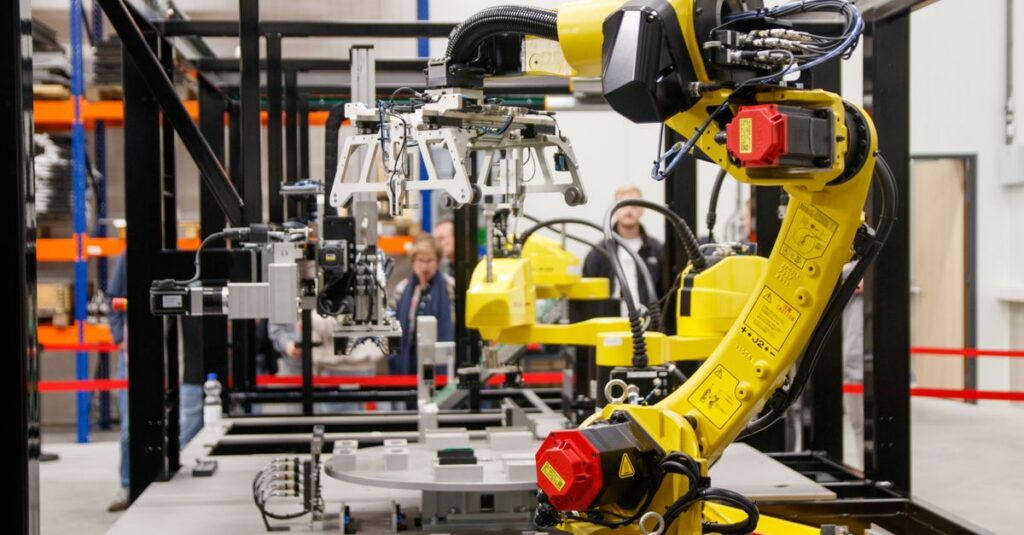
Standard Bots designs and assembles six-axis programmable robot arms in the USA, offering payloads from 7 to 30 kg across multiple models. The company’s robots handle applications including machining, welding, palletizing, grinding, fastening, dispensing, assembly, and inspection. Standard Bots’ models combine six-axis arms with integrated AI, 3D vision, and no-code programming, making them accessible to manufacturers without dedicated robotics teams.
The vertically integrated manufacturing model Standard Bots has built in New York allows the company to control quality and iterate rapidly based on real-world deployment data. Standard Bots CEO Evan Beard emphasized that collecting data from actual factory deployments is critical for advancing toward full autonomy. The company has deployed AI-native robots to hundreds of American manufacturers across nearly every state, gaining operational insights that inform product development.
What Role Is Standard Bots Playing in National Robotics Policy?
Standard Bots has emerged as a leading voice in shaping U.S. robotics policy. CEO Evan Beard testified before the Congressional Joint Economic Committee in November 2025, echoing calls from the Association for Advancing Automation that a national robotics strategy is necessary to overhaul U.S. robotics and manufacturing efforts. The company has provided testimony to both the Joint Economic Committee and the Subcommittee on Research and Technology, recommending financial support for manufacturers investing in robotics and restrictions on Chinese-made industrial robots and components.
In February 2026, Representatives Jennifer McClellan, Jay Obernolte, and Bob Latta introduced the National Commission on Robotics Act, bipartisan legislation to establish a commission of 18 robotics experts tasked with evaluating U.S. competitiveness and providing policy recommendations. The legislative push reflects growing recognition that China, Japan, Singapore, Germany, and Australia already have national robotics strategies in place, while the United States lacks coordinated federal support for the industry.
China’s development is based on its national robotics strategy released in December 2021, and 57% of China’s robot market is now served by domestic manufacturers. This contrasts sharply with the U.S., where most robot hardware is imported from Japan and Europe. Standard Bots’ American manufacturing approach addresses this supply chain vulnerability while supporting domestic job creation in advanced manufacturing sectors.
Why Does Domestic Robot Manufacturing Matter for U.S. Competitiveness?
Manufacturing accounts for roughly a third of the U.S. economy when affiliated suppliers and services are included, according to Standard Bots. However, the country has shed manufacturing jobs over decades, declining from 20 million workers in 1979 to 13 million today. The company argues that U.S. manufacturing is no longer cost-competitive globally, with overseas sourcing often five to 10 times cheaper due to both labor costs and robotic automation investments.
In the first half of 2025, China’s industrial robot production surged 35.6% year-over-year, reaching nearly 370,000 units. Meanwhile, U.S. annual robot installations reached 34,200 units in 2024, down 9% from the previous year. This automation gap directly impacts manufacturing competitiveness, as robotic automation enables higher productivity and consistent quality at lower unit costs.
Standard Bots’ expansion to 70,000 square feet in Glen Cove positions the company to capture a significant share of U.S. robot deployments. The company projects it will deliver 10% of new U.S. industrial robot deployments by next year—a substantial portion given the current installation volumes. With customers ranging from Fortune 100 companies to small manufacturers, Standard Bots is demonstrating that American-made robots can compete on both capability and economics.
Standard Bots’ $200 million raise and billion-dollar valuation signal that investors see significant opportunity in domestically manufactured, AI-powered robotics. For plant managers and manufacturing engineers, the company’s demonstration-based learning approach lowers the barrier to automation adoption, particularly for operations lacking dedicated robotics programming expertise. As policy discussions around national robotics strategy intensify and the automation gap with China widens, manufacturers should evaluate whether American-made robots with rapid deployment capabilities fit their operational needs. The convergence of accessible AI, vertical integration, and policy support for reshoring may fundamentally shift the economics of factory automation over the next several years.
Q: What payload capacities do Standard Bots robots offer and what applications can they handle?
Standard Bots offers robot arms with payloads ranging from 7 to 30 kg across multiple models. These robots can handle machining, welding, palletizing, grinding, fastening, dispensing, assembly, and inspection applications, covering approximately 80% of common manufacturing tasks without requiring specialized programming expertise.
Q: How does demonstration-based learning compare to traditional robot programming for deployment speed?
Demonstration-based learning allows operators to physically show robots how to perform tasks rather than writing code, eliminating the need for specialized robotics programmers. This approach significantly reduces deployment time and makes automation accessible to smaller manufacturers without dedicated engineering teams, though specific deployment timelines depend on application complexity and facility requirements.
Article Source: Standard Bots raises $200M to expand U.S. manufacturing footprint