- AAEON debuts BOXER-8740AI and MAXER-5000 with NVIDIA Jetson Thor modules at SEMICON Taiwan 2026
- Live AI wafer inspection demo uses NVIDIA Jetson Orin NX Super Mode and GMSL cameras
- Show runs September 2-4 with over 1,300 exhibitors and 4,300 booths
- Intel Core Ultra and Wildcat Lake processors featured in new embedded platforms
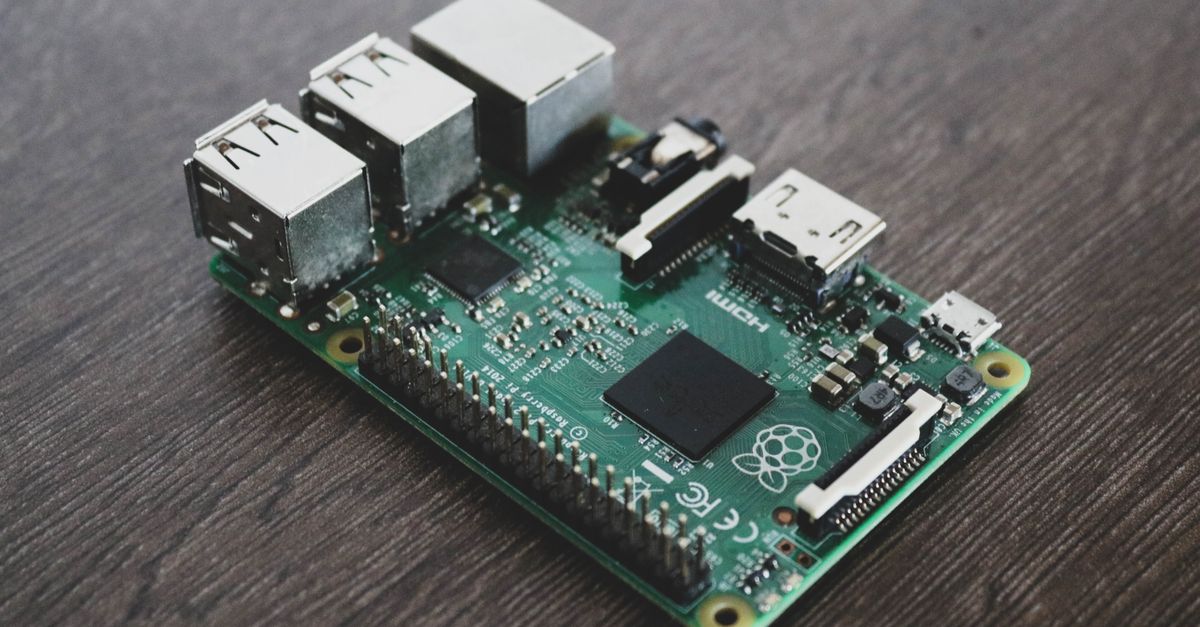
AAEON will showcase two platforms powered by NVIDIA Jetson Thor series modules at SEMICON Taiwan 2026, marking the embedded systems maker’s first deployment of the new edge AI architecture. The Thor series delivers up to 2,070 FP4 TFLOPS of AI compute and 128 GB of memory at 40-130W, providing 7.5 times the performance and 3.5 times the energy efficiency of NVIDIA AGX Orin. The BOXER-8740AI and MAXER-5000 will appear at booth S6000 during the September 2-4 event.
SEMICON Taiwan 2026 is set to feature over 1,300 exhibitors and 4,300 booths, attracting upwards of 100,000 industry professionals from 65 nations. New zones focus on quantum technology, smart manufacturing, and chiplets.
Two live wafer inspection demonstrations
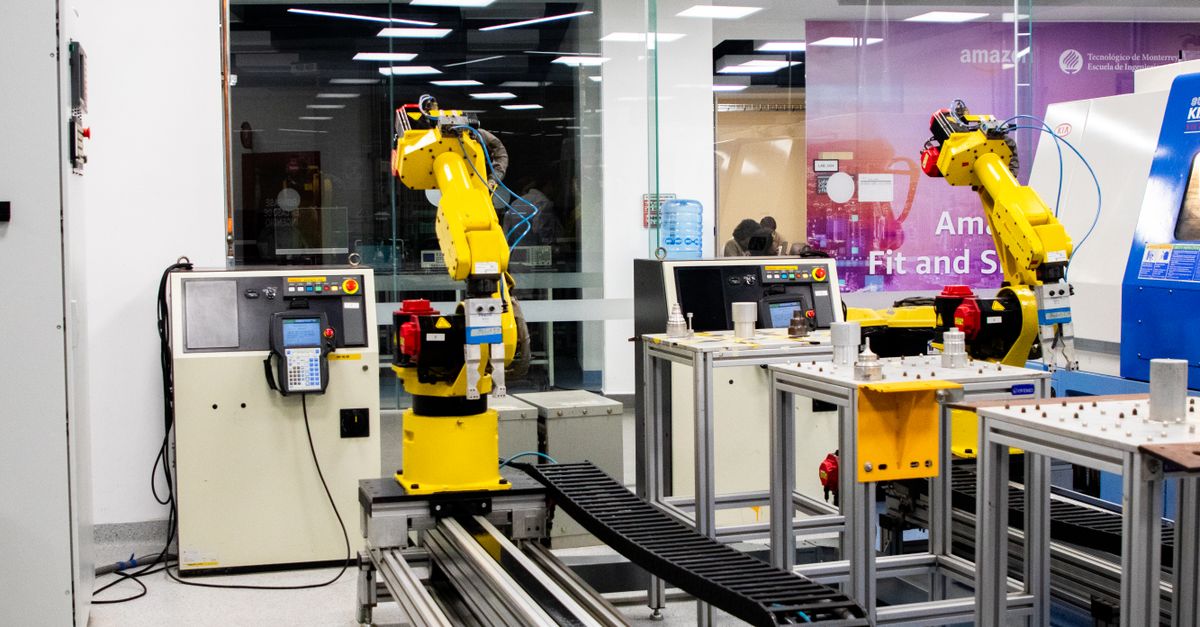
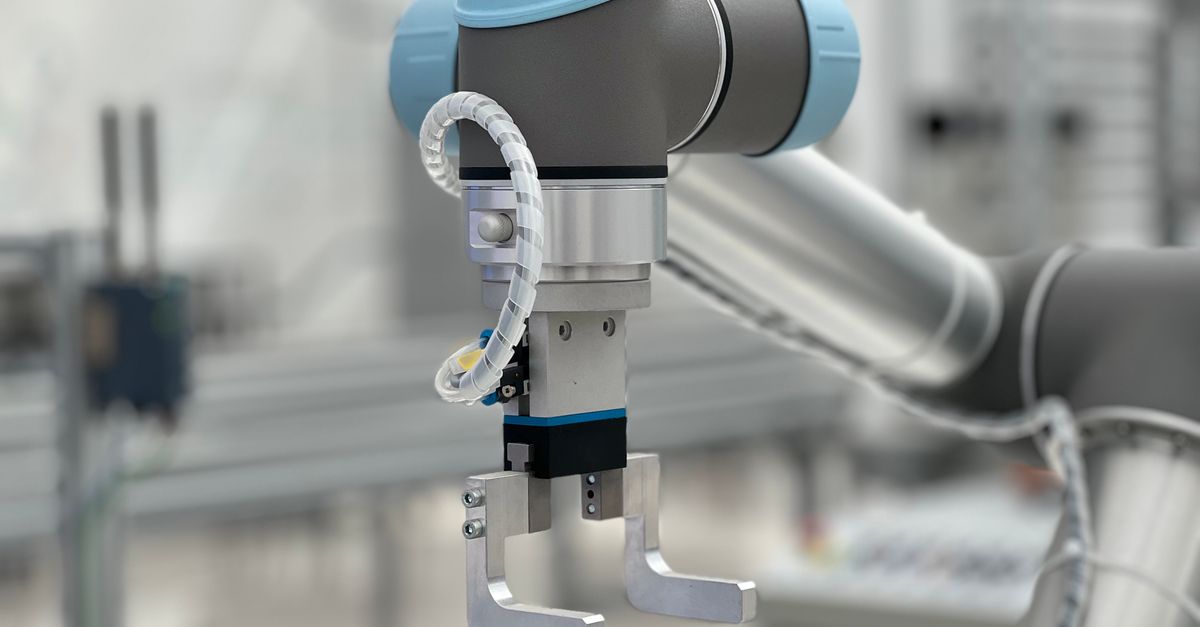
AAEON will run a live AI vision wafer inspection solution built with The Imaging Source and machine vision specialist Nevis. The system uses the BOXER-8651AI-PLUS Embedded AI System powered by NVIDIA Jetson Orin NX with Super Mode. A second demonstration features an AI vision-driven pick-and-place robotic arm powered by the UP Xtreme i14 developer board with Intel Core Ultra processors and GMSL (Gigabit Multimedia Serial Link) camera technology.
AI vision detects wafer defects by learning normal variation, reducing false alarms compared to fixed rules. Subpixel measurement and 3D imaging enable stable overlay verification, while in-line AI adapts with production data, shortening setup time and lowering manual review. Traditional rule-based AOI drives up to 50% false positives and heavy recipe tuning, while AI-enhanced AOI reaches 97-99% classification accuracy with less than 10% false alarms.
The jump from Jetson Orin to Thor represents more than incremental performance scaling. The Blackwell-powered robotics supercomputer delivers 2,070 FP4 teraflops to tackle complex applications including agentic AI, high-speed sensor processing, and humanoid robotics tasks. For semiconductor fab applications, this means multiple AI inference pipelines can run simultaneously on a single edge device—vision defect detection, robotic path planning, and predictive maintenance models operating in parallel without cloud latency. That shift matters in cleanroom environments where connectivity constraints and real-time requirements make local compute architecture critical. Most semiconductor AI initiatives fail to scale beyond pilot, often because edge hardware can’t sustain production-level workloads. Thor-class modules change that calculus by making multi-model inference practical at the fab edge.
Intel platforms target developer and industrial segments
AAEON will showcase the UP WCL, featuring Intel Core processors (Series 3) CPUs formerly known as Wildcat Lake, ahead of its scheduled release later in September. The company will also display Single Board Computers, Computer-on-Modules, Embedded AI Systems, and Industrial Fanless Box PCs across its booth.
The Intel Core Ultra-based UP Xtreme i14 developer board demonstrated in the robotic arm application uses GMSL camera technology, a serialization standard that enables long-distance, high-bandwidth video transmission over a single coaxial cable. GMSL has become standard in automotive and industrial vision applications where camera placement flexibility and electromagnetic interference immunity matter more than cost.
Fab automation converges on edge AI
Samsung’s collaboration with NVIDIA has led to 20 times greater performance and scalable deployment across semiconductor manufacturing. Samsung is using NVIDIA Isaac Sim, built on NVIDIA Omniverse and NVIDIA Cosmos world foundation models, to connect synthetic and real data, middleware and teleoperation, as well as the NVIDIA Jetson Thor high-performance edge AI platform optimized for humanoid robotics. AAEON’s Thor-based platforms position the company to supply hardware for similar deployments where fabs integrate robotics, vision inspection, and predictive analytics into unified edge compute architectures.
Artificial intelligence and high-performance computing are quickening the pace and stimulating emerging uses, while the semiconductor field extends the limits of both process miniaturization and system-level innovation. Cutting-edge process nodes, sophisticated packaging, intelligent manufacturing, quantum technologies, and collaborative ecosystems are pivotal growth catalysts.
AAEON’s Thor deployments signal that edge AI compute has crossed the threshold where multi-model inference runs reliably in production fab environments. When evaluating vision inspection upgrades, benchmark new platforms against workload parallelism—can the system run defect classification, robotic control, and yield prediction simultaneously without throttling throughput? The gap between Orin and Thor performance means systems spec’d 18 months ago may no longer support the AI model complexity fabs now expect. Budget cycles in 2027 should account for compute platform refreshes, not just camera and optics upgrades.
What is the practical difference between NVIDIA Jetson Orin and Thor for wafer inspection?
Thor delivers 7.5 times the AI compute performance of Orin at 2,070 FP4 TFLOPS within a 40-130W power envelope. This allows fabs to run multiple AI models in parallel on a single edge device—defect detection, yield prediction, and robotic coordination—without offloading inference to cloud servers. Orin handles single-pipeline inspection tasks; Thor supports multi-model workflows that integrate vision, control, and analytics in real time.
How does GMSL camera technology improve industrial vision systems?
GMSL transmits high-bandwidth video over a single coaxial cable, enabling camera placement up to 15 meters from the processing unit without signal degradation. In semiconductor cleanrooms and robotic workcells, this eliminates bulky cable bundles and reduces electromagnetic interference compared to standard Ethernet or USB connections. The serialization standard also simplifies cable routing in tight enclosures where space and contamination control are constraints.
Article Source: AAEON to Demonstrate High-Performance Computing for Next-Gen Semiconductor Manufacturing at SEMICON Taiwan