- Physical AI systems actively reason and act in real time on factory floors.
- World foundation models generate synthetic environments mirroring actual shop conditions.
- Manufacturers compress robot development cycles from years to months using simulation-first approaches.
Manufacturing’s long-standing investment in digital twins promised to revolutionize factory operations by allowing virtual testing before physical deployment. Yet for many manufacturers, that promise stalled when simulated systems failed to translate to the unpredictability of the shop floor. Physical AI is closing that gap, not because digital twins got better, but because a fundamentally different architecture has entered the conversation. These are systems that do not simply simulate the physical world but actively reason about it and act on it in real time, powered by a spatial computing stack combining foundation models, AI-generated software, and high-fidelity 3D sensing. The shift matters because competitive advantage in the next two to three years will belong to manufacturers who recognize that the constraint is no longer hardware—it is intelligence.
Why Has the Sim-to-Real Gap Persisted?
The “reality gap” is the collection of discrepancies—from physics to perception—that can cause a policy to fail when transferred from simulation to a real robot. Robots trained in simulation frequently underperform in the physical world because lighting shifts, material inconsistencies, and sensor noise create conditions that virtual environments could not faithfully replicate. This technical obstacle has limited the return on investment from simulation platforms and sensor networks despite billions in capital deployed across the industry.
World foundation models are changing that by training on massive datasets of physical interaction and sensor data to generate synthetic training environments that closely mirror actual shop floor conditions. By integrating NVIDIA Omniverse libraries directly into its RobotStudio programming and simulation suite, ABB Robotics will now deliver physically accurate simulation capabilities in its platform, dramatically cutting engineering time, reducing deployment costs by up to 40% and accelerating time to market by as much as 50%. Early pilots include Foxconn in consumer electronics assembly and Workr in small to medium-size manufacturing automation.
How Are Manufacturers Deploying Physical AI Today?
At a Siemens blueprint autonomous electronics factory in Erlangen, Germany, Humanoid’s HMND 01 wheeled humanoid has completed autonomous logistics operations in a first proof of concept within the production environment, with simulation-first development compressing what typically takes up to two years of hardware development down to just seven months. In automotive manufacturing, Schaeffler and Accenture are starting to adopt Mega to test and simulate fleets of Agility Robotics Digit for material-handling automation, while Hyundai Motor Group is using the blueprint to simulate Boston Dynamics Atlas robots on its assembly lines, and Mercedes-Benz is using it to simulate Apptronik’s Apollo humanoid robots to optimize vehicle assembly operations.
Industrial facility digital twins are physically accurate virtual replicas of real-world facilities that serve as critical testing grounds for simulating and validating physical AI and how robots and autonomous fleets interact, collaborate and tackle complex tasks before deployment. This simulation-first approach dramatically accelerates development cycles while reducing the costs and risks associated with real-world testing. The practical implication is that plant managers can now validate automation investments virtually, test multi-robot coordination scenarios, and train vision systems under variable lighting conditions before committing to floor space or production downtime.
What Does This Mean for Operations Leaders?
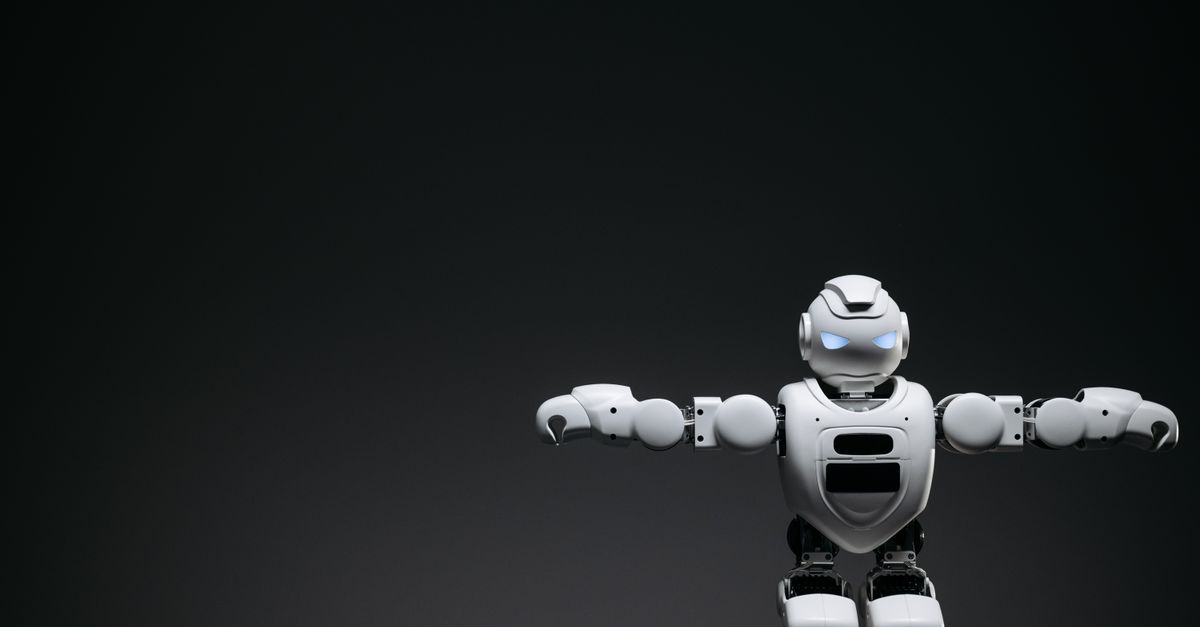
Physical AI—intelligence that can sense, reason, and act in the real world—marks a decisive shift, which is why Microsoft and NVIDIA are working together to help manufacturers move from experimentation to production at industrial scale. Embodied AI-enabled robotics helps companies address the “great margin squeeze” head-on and shift to a high-mix manufacturing approach with faster changeovers and fewer exceptions that stop the line—without adding engineering bandwidth. Unlike traditional AI that improves decisions in dashboards and forecasts, embodied AI gives machines “intelligence” that enables it to interact directly with the physical environment by perceiving its surroundings, reasoning about what it senses, and acting with real-world insight in real time.
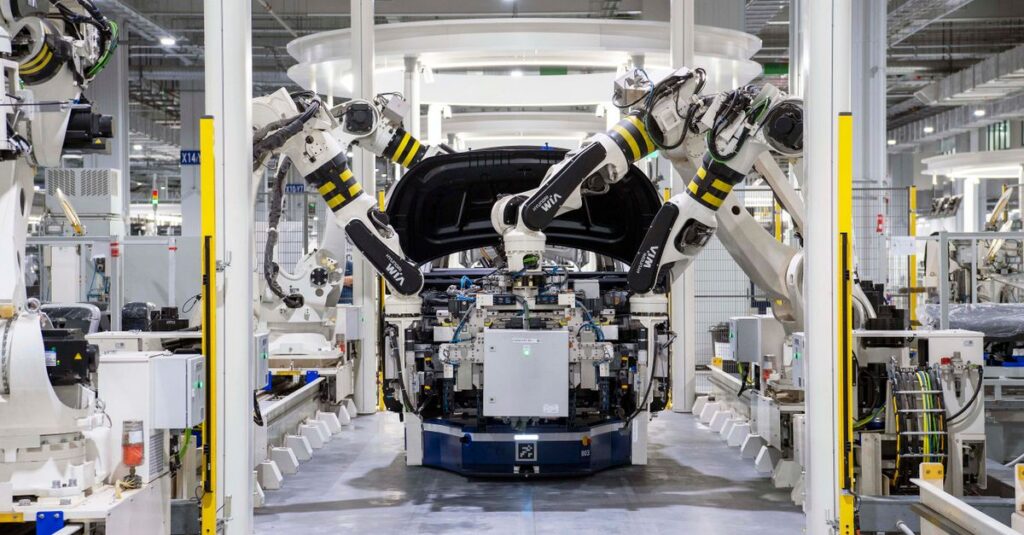
The technology stack now supports applications from autonomous welding in high-mix environments to predictive maintenance systems that monitor equipment behavior in real time. Path Robotics is creating a blueprint for using AI to automate high-mix manufacturing tasks, starting with welding, using Obsidian, Path’s foundational AI model. These deployments demonstrate that physical AI is moving beyond pilot projects into production-scale implementations where return on investment is measurable in reduced scrap rates, faster changeovers, and improved throughput across variable product mixes.
Physical AI represents a fundamental shift from simulation as a design tool to simulation as a training environment for intelligent systems that adapt to real-world variability. Operations leaders building 2026 roadmaps should evaluate physical AI platforms not as incremental improvements to existing automation but as enablers of adaptive autonomy that can handle the high-mix, low-volume production demands increasingly common across manufacturing sectors. The manufacturers gaining competitive ground will be those who recognize that intelligence, not hardware capacity, now determines automation ROI.
Q: How is physical AI different from traditional digital twin implementations?
Traditional digital twins create virtual replicas for design validation and scenario testing but typically require manual intervention to translate insights to the shop floor. Physical AI systems combine foundation models with real-time sensing and actuation to enable robots and autonomous systems to perceive, reason, and adapt directly in response to changing conditions without reprogramming.
Q: What kind of ROI can manufacturers expect from physical AI deployments?
ABB Robotics reports that integrating physically accurate simulation capabilities can reduce deployment costs by up to 40% and accelerate time to market by as much as 50%. ROI comes from compressed engineering cycles, reduced physical testing requirements, lower scrap rates in high-mix production, and faster changeovers between product variants.
Article Source: How Physical AI Is Closing the Gap Between Simulation and the Shop Floor